Documentation in Spain
How to get the NIE and residency in Spain
The NIE is your tax and administrative ID for any transaction in Spain. Residency (CUE) is a separate matter. Here is how both work in practice.
May 15, 2026 · Riondato & Partners
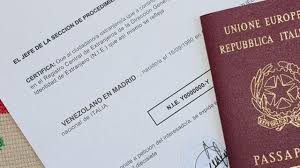
How to get the NIE
The NIE (número de identificación de extranjero) is the identification number assigned by the Spanish State to anyone who needs to carry out an act that requires registration: buying a house, registering as self-employed, setting up a company. It does not expire, because it works much like the Italian codice fiscale. The same number is also your NIF, the tax identification number.
Getting the paperwork together is simple: fill in form Ex 15 and pay the fee through form 790, at the bank counter, an ATM, or by direct debit. Forms, fees, and instructions are available here: https://icp.administracionelectronica.gob.es/icpplus/index.html.
In any case, our firm can help you obtain the NIE: we book the appointment and prepare every document required.
What is the CUE: Certificado de Ciudadano de la Unión Europea (sometimes wrongly called "green NIE")
The CUE is issued to anyone who plans to settle in Spain for more than three months. It is mainly required to swap an Italian driving licence for a Spanish one (the so called canje) and for other matters, such as obtaining the tax exemption on a pension.
How to obtain the CUE
Getting the CUE is harder than getting the NIE. Many clients, before turning to the firm, made several trips to the Comisaría without success.
The firm assists clients who need the residency certificate by booking the appointment in person at the Comisaría and preparing every document required. This avoids wasted time and frustration.
If you want to handle it on your own, book an appointment on the Spanish Government portal https://icp.administracionelectronica.gob.es/icpplus/index.html and bring:
- NIE + photocopy
- Passport or national ID + photocopy
- Form Ex 18
- Proof of payment of form 790 (just over 10 €) https://sede.policia.gob.es:38089/Tasa790_012/ImpresoRellenar
- One photograph
- Empadronamiento (proof of address from the local town hall)
Depending on your employment situation, you will also need:
Employees. Vida laboral certificate showing at least 3 months of contributions. Depending on the office, a minimum monthly income between 500 € and 750 € may be required.
Self-employed. The last 3 receipts of the autónomo contribution and a monthly tax return above the minimum wage.
Pensioners. A certificate from the Spanish bank where you hold an account, showing the monthly pension is credited for a minimum amount of 426 €. Form S1 issued by your home country's health authority, granting healthcare coverage abroad.
Anyone not in employment. Two things have to be shown:
a. Sufficient funds to support yourself and your family (the figure depends on the Comisaría and on the situation of the applicant), evidenced by a stamped certificate of balance from the Spanish bank. b. A private health insurance policy with no co-payment, providing full cover, so the holder does not draw on the Spanish public healthcare system. Some Comisarías also require a certificate from the insurance company itself.
Important: after 5 years, if you want to obtain the indefinite Certificado de Residente Comunitario, the procedure has to be repeated.
If you have any doubts, Riondato & Partners is here to help
With over 45 years of experience across the various areas of law, the firm offers clients the chance to rely on a team of seasoned, dedicated professionals. Get in touch, we are at your disposal.